Bristol, England. Available for test knits
MoonSpell Knits
Test knitting by Emma
I love knits that are a little bit different: quirky, gothic and unusually structured. I've test knitted for Quail Studio, and my work has appeared in Rowan and Quail Studio pattern books, including a front cover.
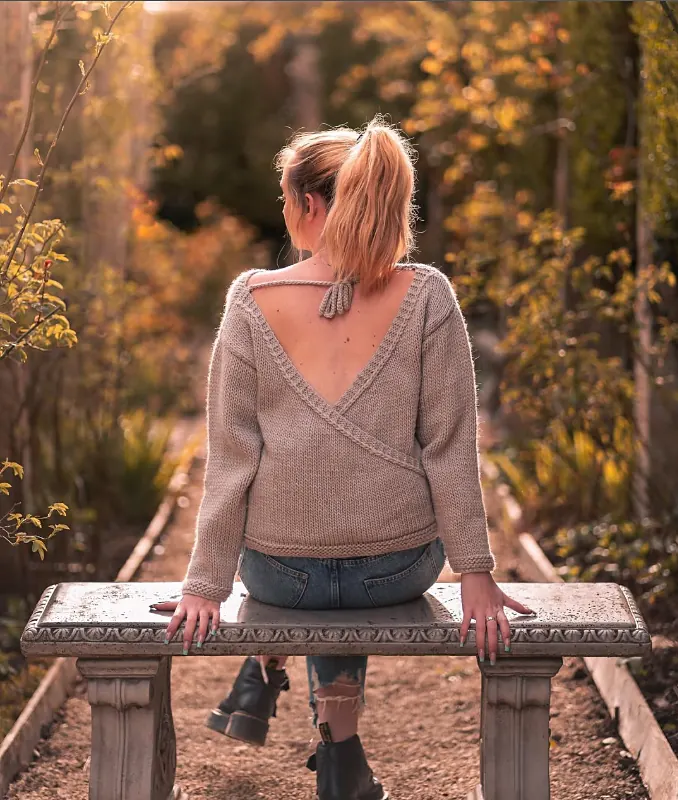
Open back jumper, a We Are Knitters design, in Castle Combe
About me
I'm Emma, a knitter based in Bristol. My nan taught me the basics when I was about seven or eight, on a rainy holiday in North Wales, and I've taught myself the more advanced and challenging techniques since.
I love everything that's rooted in nature and a little bit mystical and magical, which is where the moon and the spell come in. Knitting is my mindfulness. It lets me stay present with my family while another side of my brain unlocks and finds a calm, mindful space.
I've test knitted for Quail Studio. That means knitting a design before it is published, checking that the maths adds up and the instructions work, and reporting back so the pattern is right for every knitter who buys it. My very first test knit ended up on the front cover of Modern Men's Knits by Jen Geigley. I was giddy.
I like every project to be unique and challenging, something that pushes my skills further each time. If you're a designer with something a little bit different, I'd love to knit it for you.
My knitting story
- Learning from my nanA rainy holiday in North Wales, aged about seven or eight. First make: a very, very poor scarf.
- Teaching myself the hard stuffSelf-taught in the advanced techniques, with plenty of frogging and a lot of perseverance.
- Becoming a test knitterQuail Studio advertised on Instagram, so I applied with photos of my work.
- My first test knit, on the front coverModern Men's Knits, with more of my work in Rowan and Quail Studio pattern books.
- MoonSpell KnitsOpen for new test knits, and dreaming of pattern design one day.
Portfolio
My work
A selection of garments I've knitted, from test knits for Quail Studio to pieces I've made for myself. Tap a photo to see it larger.
Modern Men's Knits
My very first test knit, which went on to become the cover garment of Jen Geigley's Modern Men's Knits. A mustard jumper with an all over diamond texture.
Design by Jen Geigley. Book and cover photo by Quail Studio.
Cabled jumper
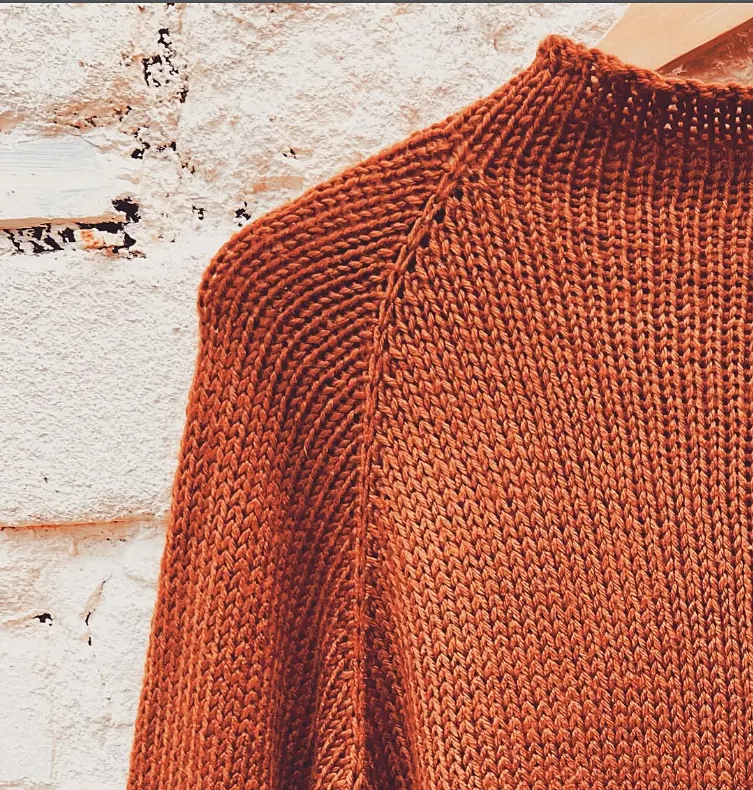
Knitted in Rowan Big Wool. A pleasure to make, and super warm.
Photo by Quail Studio.
Open back jumper
A We Are Knitters design with a crossover back and a tie at the neck, photographed in Castle Combe.
Oyster Sweater
The long cuffs and sleeves give it a little bit of swish. Knitted in We Are Knitters Pima cotton.
Dill Tee
Lovely to make and even easier to wear. Olive Pima cotton, with moss stitch for texture.
Dive Tee
A V neck tee with eyelet edging in We Are Knitters The Cotton. I wear it all the time.
Gallant Sweater
The third one I've made. Caidree's pattern is easy to follow and knits up into a lovely easy wear jumper.
Leopard colourwork
My first colourwork, and the most challenging piece I'd tried. Tension really matters with two colours.
Questions and answers
Questions and Answers
How I started, what test knitting is like, and the world I knit in.
Starting out
How did you learn to knit?
My nan taught me when I was about seven or eight, on a rainy holiday in North Wales. My first make was a scarf, and a very, very poor one.
She taught me the basics, and I've taught myself the more advanced and challenging techniques since.
What would you say to someone picking up needles for the first time?
Be ambitious.
Has a knitting disaster ever happened to you?
Every single thing I've made has had a disaster in it somewhere. I've frogged many times, sometimes 20 or 30 times on the same bit. But with perseverance and tenacity, I usually end up with something I like.
Test knitting
What does a test knitter actually do?
A designer shares a pattern before it is published. The test knitter knits it, usually to a deadline, and notes anything unclear, any maths that doesn't add up and how the fit turns out. The designer uses that feedback to fix the pattern before it goes out to everyone else.
How did you become a test knitter for Quail Studio?
Quail Studio advertised for test knitters on Instagram. I applied, sent in photos of some of my work, and that's how it started.
What's the most common problem you spot in a draft pattern?
The maths. Usually a row where the stitch count is wrong, so the numbers don't add up.
How does knitting for a designer feel different from knitting for yourself?
There's more pressure, because you want to showcase the designer's work at its best.
How did it feel seeing your first test knit on the front cover of Modern Men's Knits?
Giddy.
My work
Which project taught you the most?
Every project teaches me something new. I like each one to be unique and challenging, something that pushes my skills further every time.
How long does a jumper take you?
Usually three to four weeks, depending on how much family time and life get in the way.
Which techniques do you enjoy most?
Anything that gives a garment an unusual structure, like brioche. I also enjoy intarsia and cables.
What kind of projects would you love designers to send your way?
Anything a little bit different and quirky, with a structure that's a world away from traditional granny knitting. Anything gothic. Basically, something Claudia would wear on The Traitors.
What has been your biggest challenge so far?
Colourwork. My first leopard print piece was by far the most challenging thing I had attempted. Tension is much more of a thing when you're working with two colours, but I loved the pattern.
Is there a pattern you keep coming back to?
The Gallant Sweater by Caidree. I've made three now. It's easy to follow and knits up into a lovely easy wear jumper.
My world
What does the witchy side mean to you?
I love everything that's rooted in nature and a little bit mystical and magical.
How does knitting help you switch off?
It lets me stay present in the moment with my family, while another side of my brain unlocks and creates a calm, mindful space.
Where do you knit, and what's playing in the background?
Everywhere and anywhere. Birds in the forest and rustling leaves, waves crashing on a beach, music, a podcast or a TV show. I even knit in the car (as the passenger, not the driver!).
What's the one knitting tool you couldn't live without?
Needles, obviously! Apart from those, a pen and paper, to keep track of which row or stitch I'm on.
Which technique would you love to master next?
Pattern writing and design. To get there I need to understand the maths behind how a pattern is constructed. I think I'd start with a drawing of the garment and write the pattern from it, though I'm not sure that's how it's done, which is probably why I'm not a pattern designer yet!
Natural fibres or blends? Any yarns you avoid?
I avoid anything with glitter or sequins in it. Otherwise I'm not snobby about yarn at all. Whatever suits your budget, if it lets you be creative and enjoy what you love doing, there's no place for snobbery.
What do you enjoy when you're not knitting?
Nothing! Okay, honestly: being out in nature, long walks and cosy fires.
Knitting tips
Knitting, in pictures
Tips I've picked up along the way, for anyone just starting out and for knitters ready for the next challenge. Knitting only: two needles, no hooks.
The two stitches everything is built from
Knit
Makes a smooth little V on the side facing you. Knit every row when working flat and you get garter stitch: squishy, ridged and lies flat, perfect for a first scarf.
Purl
The knit stitch seen from the back: a small bump. Knit one row and purl the next and you get stocking stitch, smooth Vs on the front and bumps on the back.
Every other stitch, from moss stitch to cables, is a mix of these two, worked in a different order.
For beginners
Tip No. 0
Be ambitious
Don't only knit what feels safe. Pick the project that excites you, and learn what you need along the way.
Tip No. 1
Start with friendly yarn
Choose a smooth, light coloured wool or wool blend in DK or aran weight, with 4mm to 5mm needles. You can see your stitches clearly and undo mistakes easily. Save fluffy mohair and dark colours for later.
Tip No. 2
Read the ball band
The label tells you the weight, metres per ball, suggested needle size, tension and care. Check the dye lot number too, and buy enough from the same lot for the whole project, as colours can vary between batches.
Tip No. 3
Knit a tension square
Before a garment, knit a square in the pattern's stitch, wash it, let it dry and count. It is the difference between a jumper that fits and one that doesn't. See the picture below.
Tip No. 4
Markers and a row counter
Stitch markers slipped onto the needle flag the start of a round or a pattern repeat. A row counter works, but my favourite is a pen and paper by my side, to keep track of which row or stitch I'm on.
Tip No. 5
Tink, frog or lifeline
Tinking ("knit" spelled backwards) means undoing one stitch at a time to fix a recent mistake. Frogging is pulling the needles out and ripping back ("rip it, rip it"). A lifeline is a thread of spare yarn run through a row of stitches, so you can rip back to it safely. I've frogged the same section 20 or 30 times: perseverance pays.
Tip No. 6
Leave long tails
Leave about 15cm of yarn when you start, finish or join a new ball. Weave the tails in on the wrong side, following the stitches, and change direction a couple of times so they can't work loose.
Tip No. 7
Block your knitting
Soak the finished piece, gently squeeze out the water, roll it in a towel, then lay it flat to its measurements to dry. Blocking evens out stitches and makes a garment look finished. Never wring it.
Tip No. 8
Join a knit along
Knitting alongside others, online or at a local group, is the quickest way to learn. Someone will always have hit the same problem before you.
For confident knitters
Tip No. 9
Cables, front or back
A cable is just stitches swapping places. Slip them onto a cable needle, then hold it at the front of the work and the cable leans left, or at the back and it leans right. Keep it close to the work so the cross stays snug.
Tip No. 10
Stranded colourwork
Fair Isle style knitting uses two colours in a row, carrying the spare one across the back in a "float". Spread your stitches out on the needle before changing colour so floats aren't too tight, and catch any float longer than about 2.5cm.
Tip No. 11
Intarsia for blocks of colour
For large shapes of colour, use a separate small ball or bobbin for each block instead of carrying yarn. Twist the two yarns together where the colours meet, or you'll get a hole.
Tip No. 12
Read charts the right way
Knitting flat, read right side rows from right to left and wrong side rows from left to right. Knitting in the round, read every row from right to left. A sticky note under the current row helps.
Tip No. 13
Pick up stitches evenly
For necklines and button bands along a side edge, a good starting point is three stitches for every four rows. Lay the band flat when done: if it ripples you picked up too many, if it pulls in, too few.
Tip No. 14
Choose your size by ease
Ease is the difference between your body and the finished garment. Measure a jumper you love wearing, compare it with the pattern's finished measurements, and pick the size that matches, rather than going by chest size alone.
Tip No. 15
Invisible seams
Mattress stitch, worked with the right sides facing you, joins side and sleeve seams almost invisibly. Take a stitch on each side in turn and gently pull the seam closed every few stitches.
Tip No. 16
Swapping yarn safely
If you use a different yarn from the pattern, match the weight and tension, then compare metres, not grams. A cotton will hang and stretch differently from a wool, so swatch it first.
Tip No. 17
Try brioche
Brioche uses slipped stitches and yarn overs that pair up into tall, squishy ribs. Count each stitch and its yarn over as one stitch. Worked in two colours, the fabric is reversible, with a different colour leading on each side. It's stretchy and uses more yarn than you'd expect.
How a test knit works
Test knitter and sample knitter: who does what
| Topic | Test knitter | Sample knitter |
|---|---|---|
| The job | Checks a new pattern works before it is published | Knits the garment that will be photographed or shown |
| Which size | Often their own size, so several sizes get tested | The sample size the brand asks for |
| The yarn | The pattern yarn, or sometimes a close match | Exactly the yarn and colour specified |
| What comes back | Written feedback, measurements and photos | The finished garment itself |
| What matters most | Spotting errors and unclear steps | A flawless finish that looks perfect in photos |
Every designer and brand works a little differently, so the details are always agreed up front.
UK and US knitting terms
Patterns come from all over the world. The same thing often has two names.
| UK | US | What it means |
|---|---|---|
| Cast off | Bind off | Finishing the last row so the stitches can't unravel |
| Tension | Gauge | How many stitches and rows fit into 10cm |
| Stocking stitch | Stockinette | Knit one row, purl one row |
| Moss stitch | Seed stitch | Knit one, purl one, shifted every row for a bumpy texture |
| Yarn over (yo) or yarn round needle | Yarn over | An extra loop that makes a small hole, as in lace and eyelets |
| DK | Light worsted | A medium weight yarn, great for jumpers |
| Aran | Worsted (roughly) | A bit thicker than DK, quicker to knit |
Needle sizes differ too. Always go by the millimetre size, which is the same everywhere.
Contact
Get in touch
Are you a designer or yarn brand looking for a test knitter? I'd love to hear about your project, especially anything a little bit different, quirky or gothic.
The best way to reach me is by email, or say hello on Instagram where I share what's on my needles.
Based in Bristol, England.